
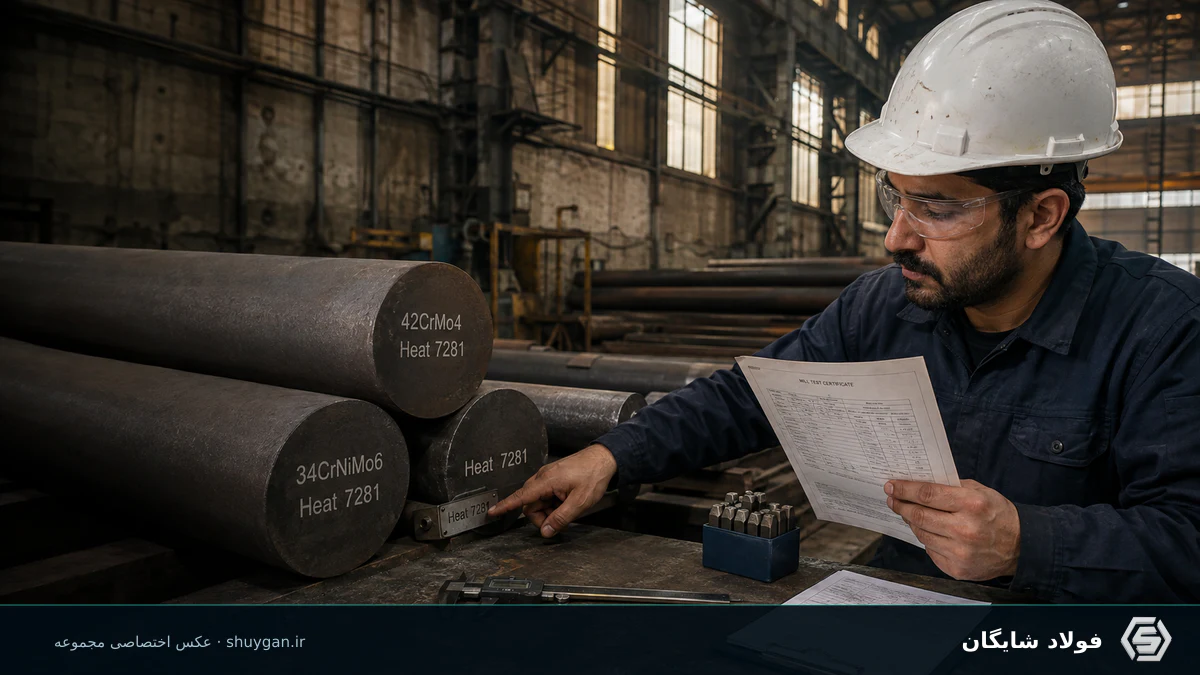
A sheet showing only the grade name is not yet an answer
A practical method for reading product identity, heat number, chemistry, mechanical properties, delivery condition and inspection validation on a steel material certificate.
A Material Test Certificate is useful only when it identifies the delivered product and links its reported values to a traceable heat. Reading one number in isolation can create false confidence; the seven checks must agree with the purchase order and the physical material.
This guide is intended for designers, buyers, heat-treatment teams and workshops supplying parts across Iran. It translates a familiar market enquiry into requirements that can be checked before payment, cutting, machining or furnace work.
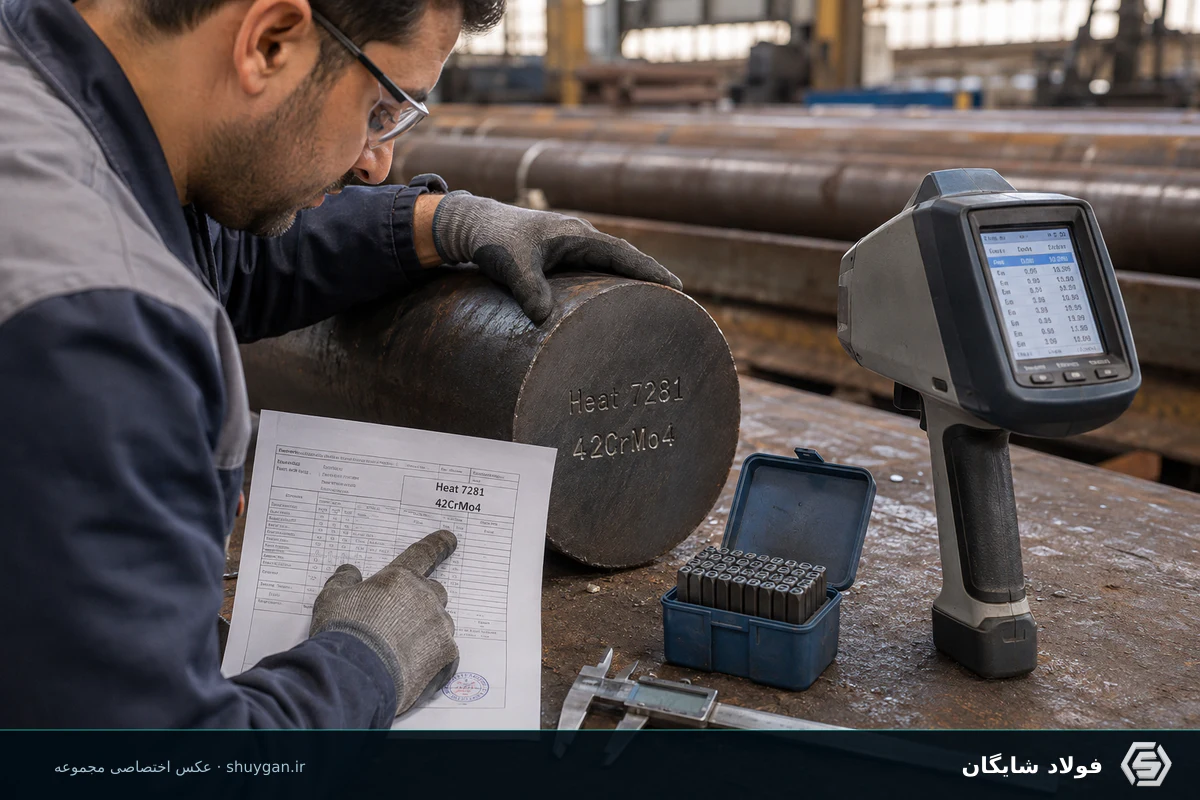
Quick decision map
| Question | Why it matters | Required evidence |
|---|---|---|
| Product and standard | Defines what was manufactured and under which rules | Grade, material number, product form, dimensions and standard edition |
| Heat number | Connects every reported result to the marked steel | A matching identifier on certificate, tag and cut piece |
| Chemistry and properties | Shows recorded analysis and tests without confusing them | Limits, actual values, units, specimen position and condition |
| Document validation | Shows who issued the record and what document type was ordered | EN 10204 type, date, issuer and authorised validation |
Identity, standard and the real engineering question
The key chain is manufacturer, product and standard, heat or cast number, chemistry, mechanical tests, delivery condition and document validation. A genuine-looking layout cannot replace consistency across those fields.
The first three lines answer identity: producer, product standard and heat number. The next two answer evidence: chemical analysis and mechanical-test results. Each value needs a unit, test method or condition and a logical link to the ordered size.
Product and standard
Defines what was manufactured and under which rules. Record Grade, material number, product form, dimensions and standard edition before commercial comparison begins. If this field remains verbal, purchasing, production and inspection can each interpret the same requirement differently.
Heat number
Connects every reported result to the marked steel. The order should therefore require A matching identifier on certificate, tag and cut piece. Catalogue data becomes useful only after product form, section and test condition are made comparable.
Section, process and delivered condition
Section size changes cooling rate, property distribution, sampling position and sometimes the applicable property range. Product form also matters: bar, plate and forging may share a grade name but follow different dimensional, testing and delivery requirements.
Delivery condition can change hardness, machinability and the relevance of a tensile result. A 3.1 certificate means the manufacturer provides specific inspection results with authorised validation; it is not a universal guarantee of origin or suitability for every design.
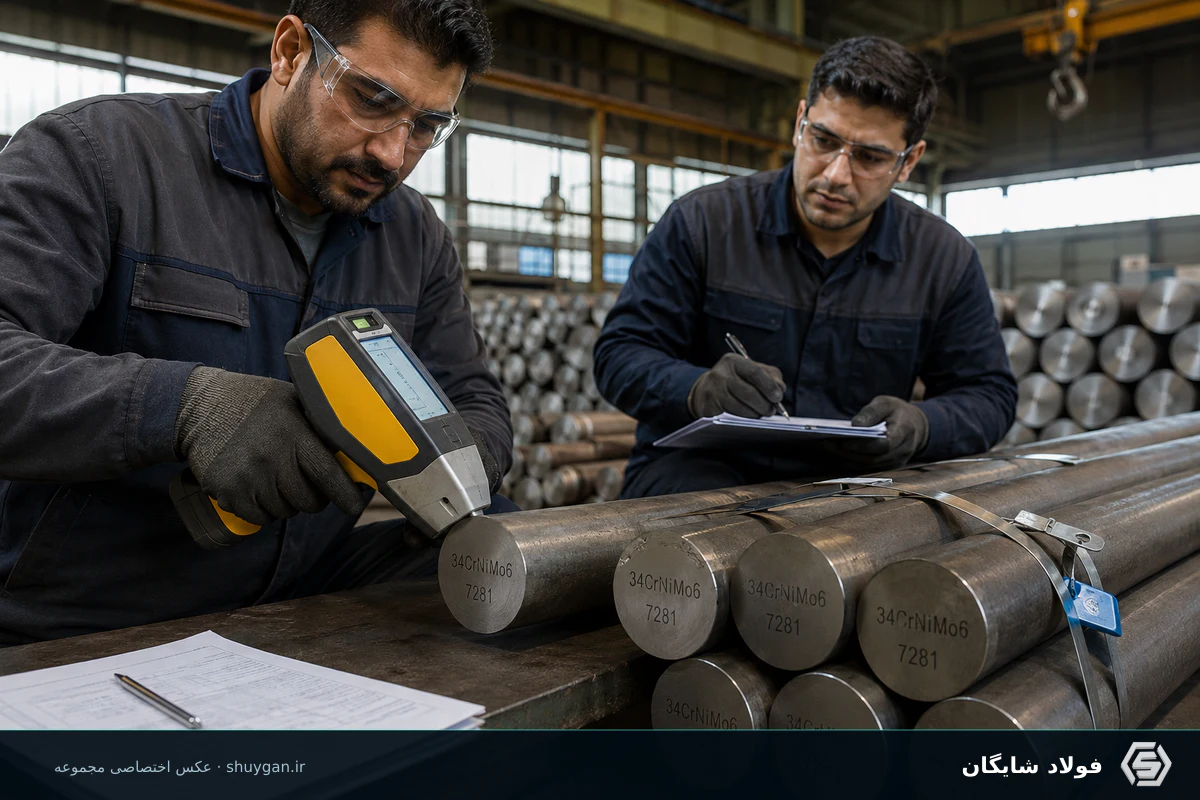
Inspection evidence that closes the decision
Evidence should answer a defined question. An MTC records heat identity and declared results; a process record proves the route used; a supplementary test report proves a result at a stated location. None of them should be treated as a substitute for the other two.
Chemistry and properties
Shows recorded analysis and tests without confusing them. Define Limits, actual values, units, specimen position and condition and identify the point where production must stop if the evidence is missing or outside the agreed range.
Document validation
Shows who issued the record and what document type was ordered. Release should be based on EN 10204 type, date, issuer and authorised validation, attached to the same heat and piece identity. A valid test report has limited conformity value after traceability has been lost.
A defensible purchase specification
Request the MTC before final acceptance, state the inspection-document type on the purchase order and require the heat number to remain visible after cutting and loading.
Grade/material number: [complete]; standard and edition: [complete]; form and dimensions: [complete]; delivery condition: [complete]; quantity and cutting tolerance: [complete]; MTC type: [complete]; supplementary test and acceptance rule: [complete]. Topic-specific requirement: Request the MTC before final acceptance, state the inspection-document type on the purchase order and require the heat number to remain visible after cutting and loading.
Ordering checklist for Tehran, Tabriz, Isfahan and Yazd
- Write the recognised market term, but place Steel MTC and the documented designation on the same enquiry.
- Close Product and standard with Grade, material number, product form, dimensions and standard edition.
- Close Heat number with A matching identifier on certificate, tag and cut piece.
- Define Chemistry and properties before irreversible processing.
- Keep Document validation traceable through cutting, storage and loading.
- State destination, required dispatch date, packaging, piece count and who authorises release.
Related encyclopaedia pages and guides
- 42crmo4 1 7225
- 34crnimo6 1 6582
- Previous Week-01 technical guide
- Next Week-01 technical guide
- Alloy-steel encyclopaedia
- Evidence and calculation methodology
- Contact Shaygan Steel
Frequently asked questions
Does a 3.1 certificate prove the steel is genuine?
It provides specific inspection results validated by the manufacturer, but identity, issuer, traceability and consistency with the actual product must still be checked.
Is correct chemistry enough?
No. Product standard, form, dimensions, delivery condition, mechanical properties and any supplementary tests can also be contractual requirements.
When should the MTC be requested?
Preferably before final payment or release, while discrepancies can still be resolved before cutting, machining or dispatch.
Sources and method
This article uses the official references below as technical orientation and translates them into a procurement workflow for the Iranian market. A producer data sheet applies to the product and conditions it states; it does not replace the current purchase standard, drawing or MTC for the delivered heat.
- ISO 10474:2013 — official technical reference
- DIN EN 10204 — official technical reference
- DIN EN 10168 — official technical reference
Conclusion and next step
Read an MTC as a connected evidence chain, not as a page of numbers. Identity, heat number, chemistry, properties, condition and validation must all describe the same delivered product.
For an enquiry, send material number, form, raw and final dimensions, quantity, delivery condition, inspection needs and destination in one message. Shaygan Steel can then review the evidence for current stock before proposing a supply route.
Comments
Comments are published after moderation.