
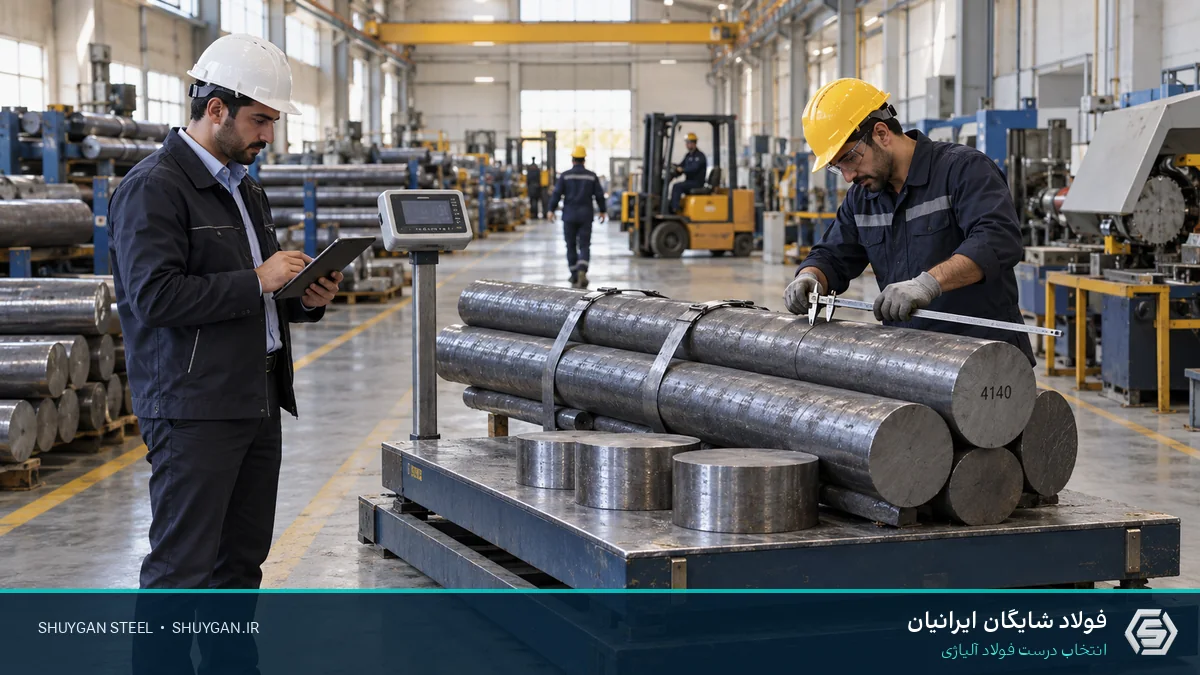
Purchased weight is not simply final volume times density. Machining stock, end facing, kerf, bar-length yield, minimum sale quantity and recoverable scrap must be separated.
This guide is written for designers, buyers, heat-treatment teams and manufacturers who need a defensible decision about raw steel weight calculation. It connects component duty to the actual product and to evidence that can be checked at purchase or release. A trade name or an isolated number is therefore never treated as a complete specification.
Where is the real engineering question?
Successful manufacture does not end with material selection. Cutting, machining, welding and heat-treatment sequence, residual stress and machining stock belong on one route card. Changing one operation can alter the basis for the next step and even break piece traceability.
A critical-component instruction should be measurable: process and tooling, tolerance, controlled temperature, sequence, inspection point and release rule. Operator experience matters, but it does not replace a written procedure and recorded result.
The relevant families in this guide are 42CrMo4 / 1.7225 / MO40, C45E / 1.1191 / CK45. Their inclusion does not imply automatic interchangeability. Product standard, heat chemistry, dimensions, delivery condition and downstream processing must be reviewed together. Safety-critical, impact-loaded, welded or heavy-section components need final approval by the responsible designer or heat-treatment specialist.
Five controls that can change the result
| No. | Decision factor | Required action or evidence |
|---|---|---|
| 1 | Raw dimensions based on surface cleanup and finishing | Record on drawing or purchase order |
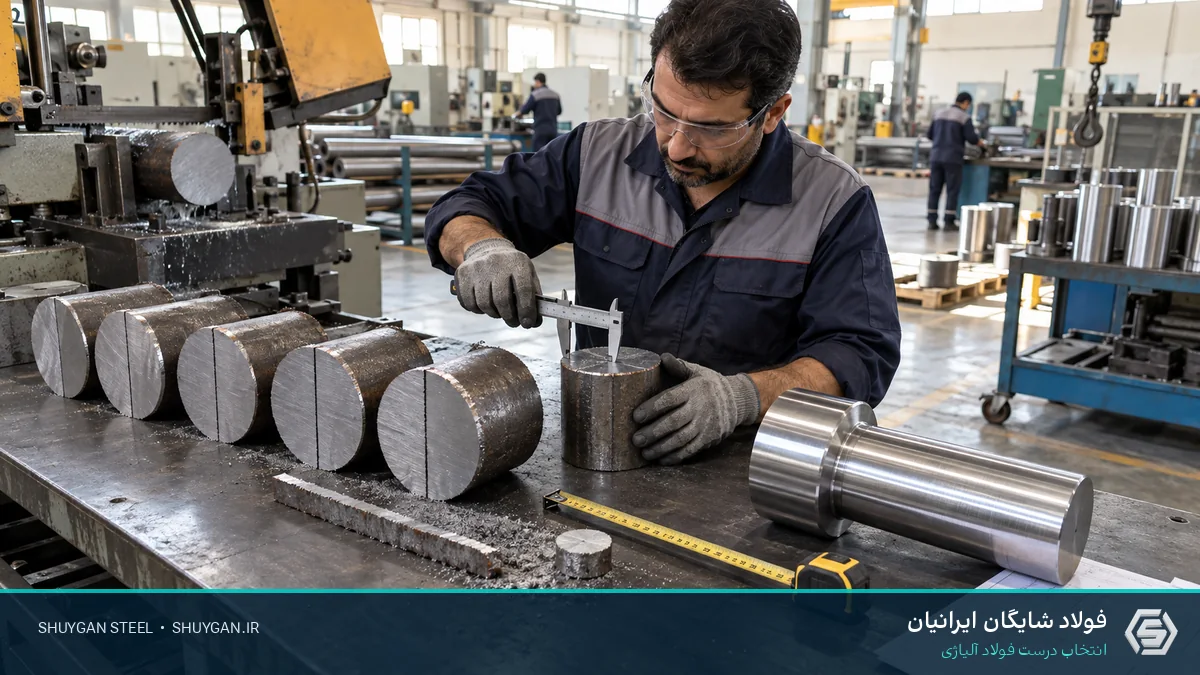
| 2 | Length allowance for squaring and facing both ends | Match against MTC or process record |
| 3 | Band-saw kerf or plate-cutting allowance | Define test position and method |
| 4 | Nesting pieces across bar length or plate area | Verify before serial production |
| 5 | Separate unusable loss from recoverable scrap | Archive against the heat number |
Each row is a process variable rather than a marketing claim. Raw dimensions based on surface cleanup and finishing must be translated into something observable or measurable. The same applies to Length allowance for squaring and facing both ends and Band-saw kerf or plate-cutting allowance. When test method or sampling position is unclear, two apparently valid reports may be describing different zones of the same product.
A practical decision workflow
- Write the duty and credible failure mode. Record load type, cycle count, contact, wear, temperature, environment and failure consequence. “The part is highly loaded” is not enough for material selection.
- Lock the material identity. Put standard designation, material number, product standard, form and delivery condition on one purchase line. MO40, 4140, VCN or BOZ can mean different things when not tied to a formal identity.
- Add section and manufacturing route. Effective diameter, thickness, section changes, holes, keyways, welding, stock removal and later heat treatment influence the result. Do not scale coupon data directly to a heavy component.
- Define how conformity will be proved. State the test, location, method, standard and acceptance criterion. The report must remain linked to the heat number and, after cutting, to the piece identifier.
- Release the load against the order. Reconcile quantity, dimensions, surface, marking, MTC, test reports and bundle tags before dispatch. Photographs and a customer hold point add useful evidence for critical orders.
This workflow turns a guess about a grade into control of a defined product. In particular, Nesting pieces across bar length or plate area and Separate unusable loss from recoverable scrap should be reviewed together. Verifying one while ignoring the other can produce false confidence.
Editorial control-priority chart
The bars are a Shaygan Steel editorial priority index. They are not HRC, MPa, probability of success or a design safety factor. A higher bar only moves that question earlier in the checklist.
Common workshop and purchasing mistakes
- Ignoring Raw dimensions based on surface cleanup and finishing and buying only by a familiar trade name.
- Turning Length allowance for squaring and facing both ends into an exact number without test location, method or specimen condition.
- Leaving Band-saw kerf or plate-cutting allowance out of the order and attempting to resolve it after manufacture or dispatch.
- Accepting a generic report instead of evidence that links Nesting pieces across bar length or plate area and Separate unusable loss from recoverable scrap to the delivered heat.
These mistakes may remain hidden on delivery. They often appear during machining, heat treatment, grinding or early service, when reconstruction of the original decision chain is slow and expensive.
Suggested enquiry and purchase wording
Grade and material number: [complete]; product standard and edition: [complete]; product form and dimensions: [complete]; delivery condition: [complete]; quantity and cutting tolerance: [complete]; inspection document: 3.1 or as contracted; supplementary test, specimen location and acceptance rule: [complete]; heat-number transfer to cut pieces: required.
For raw steel weight calculation, add one topic line: “Raw dimensions based on surface cleanup and finishing; Length allowance for squaring and facing both ends; Band-saw kerf or plate-cutting allowance.” This does not replace the drawing or an approved procedure, but it sharply reduces early ambiguity between sales, cutting, laboratory and production teams.
Iranian market names and intercity delivery
In Tehran, 1.7225 is often requested as MO40; in Tabriz, 4140 is common. Likewise, 1.6582 may be called VCN150 in Tehran and BOZ in parts of the Tabriz market. Terminology also varies across Isfahan, Yazd and other industrial centres. A trade name can begin the conversation, but the quotation and MTC should carry a formal identity.
For intercity dispatch, agree cut length, load restraint, surface protection, tagging and pre-loading photographs. Shaygan Steel can coordinate stock verification, cutting, available documentation, warehouse viewing and delivery across Iran against the recorded order specification.
Related internal resources
- 42CrMo4 / 1.7225 / MO40 — steel dossier
- C45E / 1.1191 / CK45 — steel dossier
- Search all 2,273 steel dossiers
- Data method and limits of engineering indices
- Weight and engineering calculator
- Ask about stock, cutting and MTC
- Previous Week-2 guide: 25CrMo4 / 1.7218 for Welded Parts: Preheat, HAZ and Sequence
Frequently asked questions
Is the grade name enough to decide raw steel weight calculation?
No. The grade narrows chemistry and family, while the actual product is defined by dimensions, delivery condition, heat number, manufacturing history and downstream processing. Conformity must be demonstrated where the component needs the property.
Should the MTC be checked before ordering a new test?
First reconcile product identity and MTC with the order. Then add a supplementary test when the contract, component risk or technical uncertainty requires it, using a pre-agreed method and acceptance rule. Testing cannot repair a broken identity chain.
Are the values in this article a heat-treatment recipe or allowable design stress?
No. The article explains a decision and control route. Final temperatures, times, quench medium, target hardness, allowable stress and acceptance criteria must come from the current standard, producer data, drawing, MTC and the responsible specialist.
What information speeds up an enquiry?
Send designation and material number, product form, diameter or thickness, length and quantity, delivery condition, cutting requirement, destination and MTC requirement. For a critical part, also state the application, critical property location and required test.
Conclusion
To manage raw steel weight calculation, turn the five factors in this guide into evidence and hold points. The best decision is not automatically the most expensive grade or the highest hardness; it is the route that matches component duty, repeats in the real section and remains traceable from heat number to delivery. Review the completed requirement once with the supplier, manufacturer and downstream process owner before purchase release.
Comments
Comments are published after moderation.